- EXPERIENCED LAW FIRM IN TOLEDO, OH
- (419) 662-3100



How Do I Locate Wills in Ohio?

Sibling Abusing POA… What To Do
September 15, 2021
What Is Probate Litigation and How Is It Defined?
September 30, 2021
How to Find Someone’s Will in Ohio
A person’s passing can create confusion about what happens next, especially if family members are unsure whether a will exists or where it is located. A will can make the probate process easier by identifying beneficiaries, naming an executor, and explaining how the deceased wanted assets distributed.
If you believe you have an interest in an estate, finding the last will and testament is often one of the most important first steps.
Table of Contents
Are Wills Public Records in Ohio?
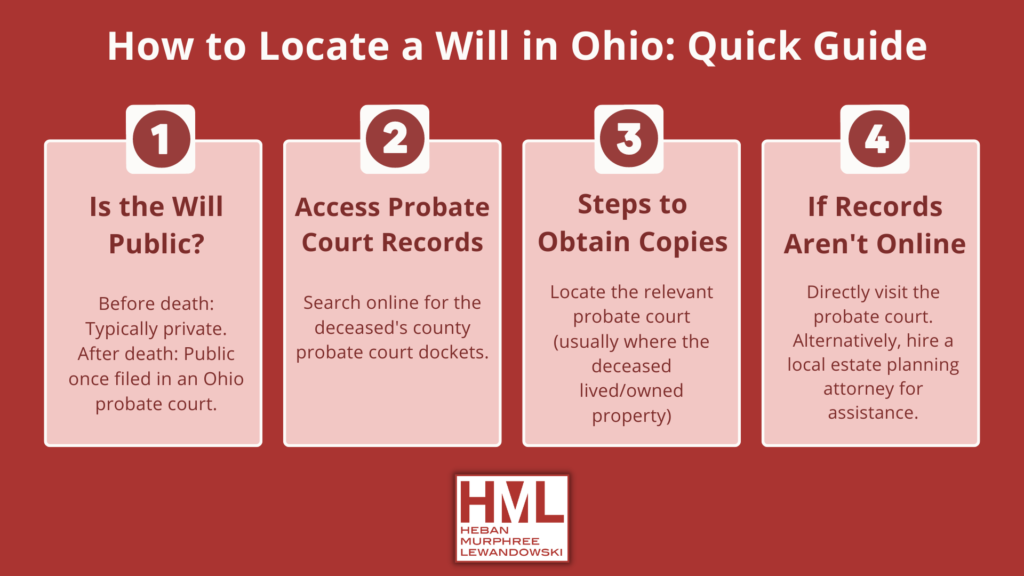
In most situations, a will is not public while the person who created it is still alive. Before death, the document is usually only accessible to the person who signed it, their attorney, and anyone they specifically authorized to see it.
After death, a will generally becomes part of the probate record once it is filed with the court. If you are trying to determine whether a will has already been submitted, it may help to review the Ohio probate process and when a will is formally filed.
Where to Look for a Will
Before assuming no will exists, it is important to check the most likely places where the document may have been stored. Wills are often kept in secure locations or with professionals involved in estate planning.
- Attorney records
- Safe deposit boxes
- Home files
You may also want to ask close family members, trusted friends, or the named executor if one is known. Many people tell at least one person that they have a will and where it is kept.
If you are already facing questions about how an estate is being handled, our Ohio probate litigation attorneys can help assess your next steps.
How to Locate and Request Probate Court Records
If the will has already been filed, you may be able to locate it through the probate court in the county where the deceased lived at the time of death. In some cases, probate may instead be opened in a county where the deceased owned real estate.
Once you identify the proper county, search that probate court’s online docket or contact the clerk directly. Even when the actual document is not available online for free, the court record may still show the case number, executor, attorney, and other useful information.
Related guidance that may help includes learning about estate administration in Ohio and understanding what happens after a will is filed with the probate court.
If You Can’t Find Probate Records Online
Online court systems are helpful, but they are not always complete or easy to search. If you cannot locate probate records online, you can contact the probate clerk directly or visit the court in person and ask for assistance.
You may also request copies by mail, fax, or written request. If distance is a problem, an attorney at the probate court may be able to help you obtain records.
If the issue involves a broader inheritance concern, you may also want to review our page on estate litigation in Ohio or speak with an attorney about potential estate-related disputes.
What If You Can’t Find It?
If no will is located, the estate may proceed under Ohio intestacy laws.
That means Ohio law, rather than a written will, will control how property is distributed. In some cases, a will may surface later, but if nothing is found, the probate court may proceed under intestate succession rules.
If you believe a will once existed, or you are concerned that estate documents are missing, it is important to act quickly. Depending on the facts, you may also need to understand issues involving contesting a will in Ohio or disputes over who should control the estate.
If you need help now, contact our office or request a free case evaluation.
Talk to an Ohio Probate Lawyer
Finding a will, obtaining probate records, and understanding what happens if no will exists can all become more complicated than families expect. Heban, Murphree & Lewandowski, LLC helps clients understand estate procedures, probate filings, and disputes that may develop after a loved one passes away.
Whether you are looking for a will, dealing with uncertainty about probate, or concerned about a developing estate conflict, our team is ready to help.