- EXPERIENCED LAW FIRM IN TOLEDO, OH
- (419) 662-3100



Final Distribution of an Estate in Ohio: When Do Beneficiaries Get Paid?

Navigating Estate Disputes in Ohio
July 20, 2023
How Can Estate Litigation Be Avoided?
August 1, 2023
Guide to the Final Distribution of Estate Assets
Losing a loved one is difficult, and the legal process of identifying, managing, and distributing estate property can add another layer of uncertainty. Before beneficiaries receive their inheritances, the executor or administrator may need to locate assets, address creditor claims, resolve tax matters, complete court filings, and confirm that the estate is ready to close.
Heban, Murphree & Lewandowski, LLC helps Ohio executors, administrators, heirs, and beneficiaries understand the Ohio probate process and the steps that generally must occur before the final distribution of estate assets.
What Is the Final Distribution of an Estate?
Final distribution is the stage of estate administration when the remaining property is transferred to the people or organizations legally entitled to receive it. Distribution generally occurs only after the fiduciary has identified estate assets, addressed valid debts and expenses, handled applicable taxes, resolved disputes, and completed the required probate accounting or court procedures.
The precise process depends on how the property was owned, the terms of the will, whether the estate is solvent, whether beneficiaries agree, and whether any litigation or title problems remain unresolved.
The Three Main Paths of Asset Distribution After Death
A person’s property does not necessarily pass through one single process. Assets may transfer through probate, outside probate, or through arrangements completed before death.
1. Assets Distributed Through Probate
Probate property is generally controlled by the executor or administrator and distributed according to the will or, when there is no valid will, Ohio intestate-succession law. Examples may include individually owned bank accounts, vehicles, personal property, and real estate titled solely in the decedent’s name.
2. Assets Transferred Outside Probate
Some property may pass directly to another person through survivorship ownership, beneficiary designations, transfer-on-death arrangements, payable-on-death accounts, or trust provisions. These assets may avoid probate, although ownership disputes or beneficiary challenges can still arise.
3. Property Transferred During Life
A person may transfer property before death through gifts, deeds, trusts, business-succession planning, or other lifetime arrangements. These transfers may simplify later administration, but they can also create tax, Medicaid, creditor, control, or family-dispute concerns.
What Can Delay the Distribution of Estate Assets?
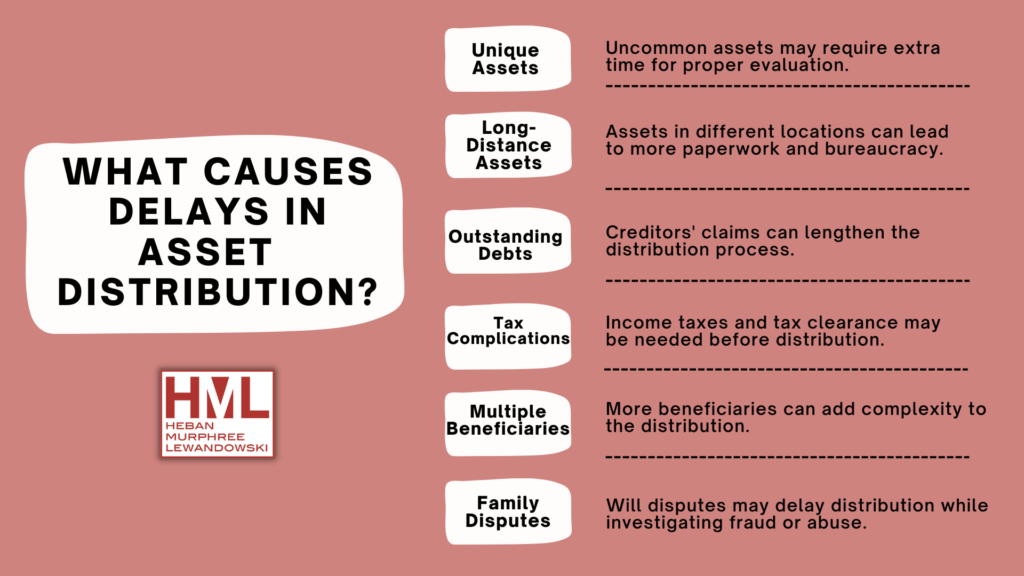
Estate distributions can be delayed for practical, financial, legal, or family-related reasons. Common complications include:
Unique or Difficult-to-Value Assets
Antiques, collectibles, business interests, intellectual property, and unusual investments may require professional valuation.
Property in Other States
Out-of-state real estate may require ancillary probate, local counsel, additional filings, or separate court proceedings.
Outstanding Debts
The fiduciary must identify creditor claims, determine which claims are valid, and make sure estate obligations are paid in the proper order.
Tax Matters
Final income-tax returns, fiduciary income-tax returns, property taxes, business taxes, or other filing obligations may need to be completed.
Numerous Beneficiaries
More beneficiaries can mean more notices, signatures, transfers, tax forms, questions, and opportunities for disagreement.
Will or Inheritance Disputes
Questions involving undue influence, fraud, capacity, missing assets, ownership, or fiduciary misconduct may prevent final distribution.
The Role of the Executor or Administrator
The executor or administrator is responsible for managing the estate from appointment through final distribution. This person is often referred to as the fiduciary or personal representative.
Because these duties involve legal deadlines, fiduciary obligations, court procedures, and potential personal liability, executors and administrators often benefit from guidance from an experienced Ohio estate administration attorney.
Distributing Unique, Business, and Out-of-State Assets
Unique assets such as antiques, collectibles, closely held businesses, farms, intellectual property, cryptocurrency, and foreign property may require additional investigation, valuation, or specialized professional assistance.
Real estate located outside Ohio may require a separate probate proceeding in the state where the property is located. Business interests may require review of operating agreements, shareholder agreements, buy-sell provisions, licenses, debts, and succession rights.
These issues can complicate estate administration and should be identified before beneficiaries are promised a specific distribution date.
Debts, Expenses, and Taxes Must Be Addressed
Beneficiaries generally should not receive the final estate property until the executor has determined that valid debts, administration expenses, taxes, and other obligations can be paid.
If an estate does not have enough property to pay all valid obligations, Ohio law may determine which claims receive priority. Beneficiaries may receive less than expected—or nothing—when estate debts exceed available assets.
Premature distributions can create problems for the fiduciary. An executor who distributes too much too early may have difficulty recovering the property if a creditor, tax liability, litigation expense, or other obligation appears later.
Family and Beneficiary Disputes Can Stop Distribution
Grief, old family conflicts, unequal inheritances, unclear documents, and concerns about the executor can quickly turn estate administration into a dispute.
A beneficiary may question the validity of a will, ownership of an account, a lifetime gift, a beneficiary designation, a deed, the sale of estate property, the executor’s accounting, or the disappearance of assets.
When these concerns cannot be resolved through records and communication, the estate may require objections, hearings, discovery, mediation, or other Ohio estate litigation.
Multiple Beneficiaries Add Administrative Complexity
When an estate has several beneficiaries, the fiduciary may need to coordinate notices, obtain addresses and tax information, explain delays, arrange appraisals, sell property, divide tangible items, and document each transfer.
Certain assets cannot be divided evenly without being sold. Beneficiaries may disagree about whether to keep or sell real estate, how personal property should be allocated, or whether one beneficiary should receive an asset in place of cash.
Disputes involving insurance proceeds, account designations, or competing beneficiary claims may require a separate legal analysis. Learn more about beneficiary disputes.
Executors Can Help Prevent Distribution Delays
Legal Counsel Can Help With Final Estate Distribution
Probate counsel can help an executor determine which property belongs to the estate, understand fiduciary duties, address creditor claims, prepare court filings, resolve title issues, review proposed distributions, and complete the final accounting.
An attorney can also help beneficiaries understand delays, request information, review accountings, investigate missing assets, and respond when they believe the executor is not administering the estate properly.
Early guidance can help prevent a routine distribution question from becoming a larger conflict involving accounting objections, executor removal, fiduciary claims, or litigation.
Questions About the Distribution of an Ohio Estate?
Heban, Murphree & Lewandowski, LLC helps executors, administrators, beneficiaries, and families understand estate administration, final accountings, asset transfers, and disputes that may delay distribution.
Contact our office before distributing disputed property, closing an estate, or allowing an unresolved probate problem to become more difficult.
This page provides general information about Ohio probate and estate administration and does not create an attorney-client relationship. The distribution process depends on the will, asset ownership, debts, taxes, court filings, disputes, and specific circumstances of the estate.